DigSights Overview
TABLE OF CONTENTS
- WHAT CONTRIBUTES TO RISK?
- HOW DOES DIGSIGHTS QUANTIFY RISK?
- HOW WELL DOES DIGSIGHTS PREDICT INCIDENTS?
- HOW DOES DIGTIX USE DIGSIGHTS?
DigSights is a set of machine learning ("ML") models built using artificial intelligence ("AI"). The goal of DigSights is to proactively quantify risk associated with various damage prevention operations, improve public safety, and realize operational efficiencies within the utility industry.
WHAT CONTRIBUTES TO RISK?
Risk can be considered as a combination of two quantifiable factors, as shown in the risk matrix (Figure 1) below:
1) The probability of an adverse event occurring aka “likelihood”.
2) The consequence if an adverse event does occur aka “impact”.
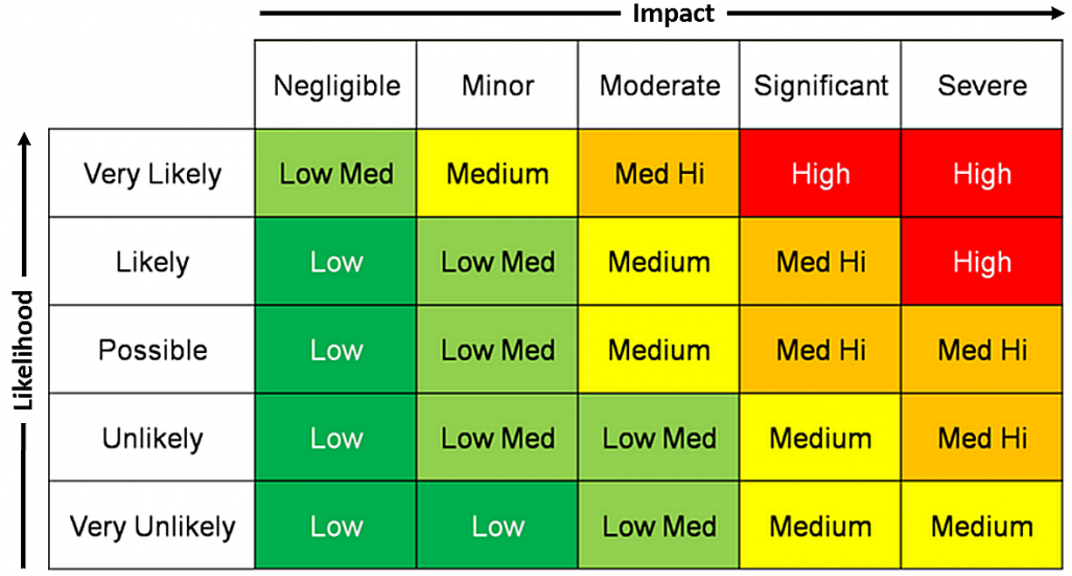
Figure 1: Risk Matrix
HOW DOES DIGSIGHTS QUANTIFY RISK?
AI built using machine learning is all around us. Such AI is what drives facial and image recognition, self-driving cars, speech-to-text, and much more. In all of these applications of ML, data scientists use historical data to carefully train and develop models on past events so that they may predict future events with a high level of confidence.
DigSights leverages machine learning to quantify risk. One of the events that DigSights predicts is the likelihood of incidents occurring for excavation locate requests. New machine-learning models are being developed to predict other events within DigSights.
HOW WELL DOES DIGSIGHTS PREDICT INCIDENTS?
Using only data provided by the call center, DigSights can:
- Predict over half (51.4%) of incidents in the highest risk locate requests (10%).
- Isolate 5% of incidents within the lowest risk locate requests (25%).
Leveraging additional data sources (weather, GIS data, etc) that reside in other platforms such as Digtix increases predictive performance even higher than what is described here.
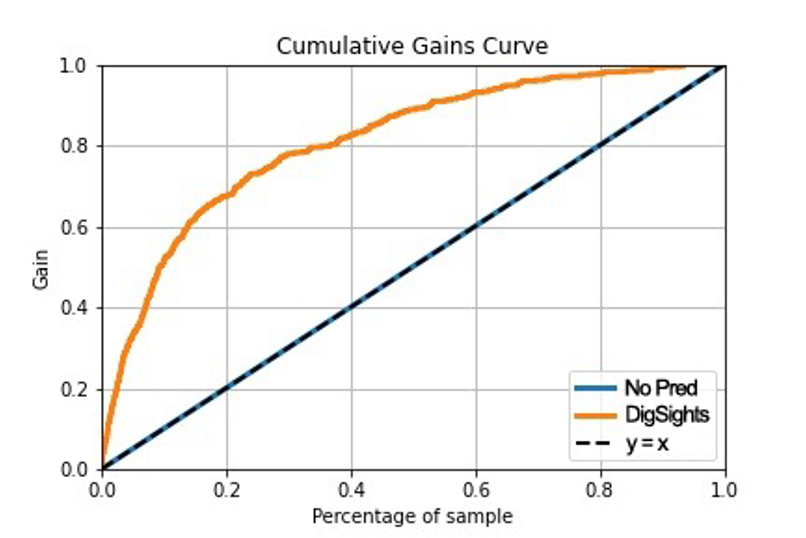
Figure 2: Incident Prediction Cumulative Gains Curve
Below is a performance chart for a pilot performed from August 2021 until April 2022 for a gas and electric company. No intervention based on DigSights' incident prediction scores was performed by the company. Rather, the goal of the pilot was to measure the predictive performance of DigSights.
Each blue dot represents an incident that occurred. The x-axis is time while the y-axis is the relative DigSights incident prediction score. The clustering of blue dots (i.e. incidents) at the top of the chart visualizes DigSights capability to effectively predict incidents before they occur.
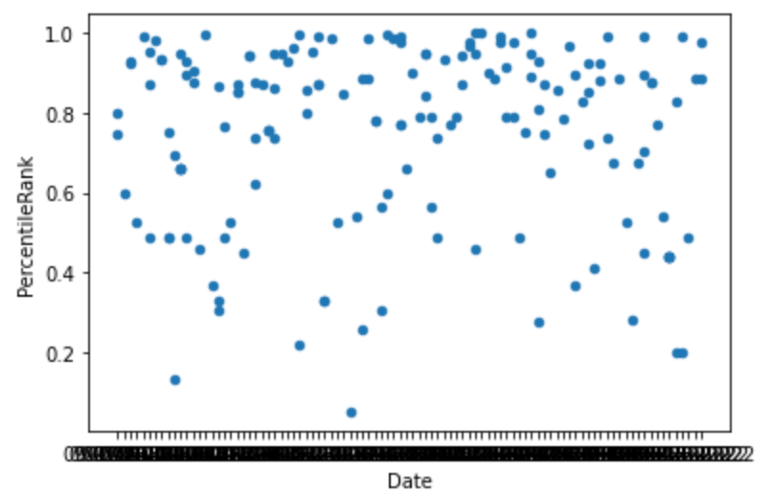
Figure 3: Performance for Eight Month Pilot for Gas and Electric Company
HOW DOES DIGTIX USE DIGSIGHTS?
Even without DigSights, Digtix will maintain risk scores for every excavator, locator (internal or third party), and locate request. Digtix uses a set of human-generated algorithms to calculate risk for a locate request. These algorithms consider:
- The locator who is assigned to the locate request.
- The excavator who called in the locate request.
- Whether critical infrastructure is in close proximity of the excavation work taking place.
- Other aspects of the excavation work being done.
Digtix's risk algorithm uses these factors to provide an effective quantification of risk for any locate request.
DigSights kicks predictive performance into high gear by leveraging AI and Machine Learning (ML) to produce much more complex (and higher performing) algorithms. The DigSights ML pipeline rigorously examines billions of data points to test millions of different predictive models. It then selects the model which has demonstrated the best performance for predicting incidents. When it comes to predicting the likelihood of an incident occurring, DigSights performs much better than any human-generated algorithm - including Digtix's.
Was this article helpful?
That’s Great!
Thank you for your feedback
Sorry! We couldn't be helpful
Thank you for your feedback
Feedback sent
We appreciate your effort and will try to fix the article