Purpose/Overview
Payment Templates define reusable rules for calculating and scheduling payments. They help users standardize payment configurations and efficiently apply them across multiple agreements. By using templates, organizations can reduce manual setup efforts, maintain consistency in payment processing, and streamline agreement management.
Navigation Path:
To access this feature: Project > Project Pay Templates or Global Templates
Things to Know:
- Payment Templates are used to define payment calculation and scheduling rules that can be reused across agreements.
- Two template types are available:
- Project Pay Template – Available only within the selected project.
- Global Template – Available across all projects in the system.
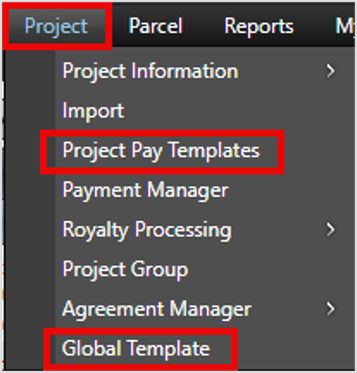
- Templates help ensure consistent payment processing and reduce repetitive configuration tasks.
Key Benefits/Use Cases:
Standardized Payment Configuration
Create predefined payment rules that can be applied consistently across agreements, reducing configuration errors and administrative effort.
Project-Specific Payment Management
Use Project Pay Templates to establish payment rules that are unique to a specific project while maintaining consistency within that project.
Enterprise-Wide Payment Standards
Use Global Templates to apply standardized payment configurations across all projects, supporting organization-wide consistency and compliance.
Related Features/Next Steps:
FAQ/Troubleshooting:
Q: What is the difference between a Project Pay Template and a Global Template?
A: A Project Pay Template is available only within the selected project, while a Global Template can be used across all projects in the system.
Q: Why should I use Payment Templates?
A: Payment Templates reduce manual configuration, promote consistency, and simplify the process of applying payment rules across multiple agreements.
Q: Can the same payment configuration be reused for multiple agreements?
A: Yes. Payment Templates are designed to store reusable payment rules that can be applied to multiple agreements.
Questions? Contact us!

Was this article helpful?
That’s Great!
Thank you for your feedback
Sorry! We couldn't be helpful
Thank you for your feedback
Feedback sent
We appreciate your effort and will try to fix the article